

There's a quiet shift happening in how people think about energy. The third cup of coffee isn't landing the way it used to. The 3 p.m. jitters, the racing heart, the dip that follows — more and more people are looking for vitality that doesn't come from caffeine. If that's you, Korean red ginseng is worth understanding, because it approaches the whole idea differently.
Start with the difference: caffeine-free
Let's be clear up front, because this matters. Korean red ginseng is caffeine-free. That makes it a distinctive choice for people who want to explore a Korean botanical ritual without adding caffeine to their day. Individual responses vary.
What it offers is a different category of thing. Ginseng belongs to a small family of botanicals called adaptogens — plants studied for helping the body adapt to physical and mental load rather than overriding it with a stimulant. Its appeal begins with a rich botanical profile and a long tradition of use. Caffeine-free describes what is in the product; it does not guarantee a particular feeling or freedom from side effects. (If "adaptogen" is new to you, we explained the history of the word here.)
Caffeine vs. adaptogen, simply put: caffeine and Korean red ginseng have different compositions. Ginseng offers a botanical profile that researchers continue to study. Choose by ingredients and suitability, rather than expecting the same experience from both.
Why people are reaching for it now
A few reasons keep coming up. Some people are simply caffeine-sensitive — coffee leaves them wired, anxious, or unable to sleep. Some have hit their limit and want to cut back without feeling flat. And some are looking for something with more behind it than a jolt: ginseng carries a 2,000-year history of being taken for vitality, and its active compounds — ginsenosides plus a range of non-saponin compounds — are associated with supporting healthy energy and resilience over time, not just in the next twenty minutes.
That "over time" part is key. Ginseng isn't built around a single dramatic moment. It's traditionally taken consistently, as a daily ritual, which is a very different relationship than the one most people have with their coffee.
How to actually fold it into your day
Begin with the directions on your product label. For advice about combining supplements with your existing routine, ask a healthcare professional. The convenient format makes the practical part simple:
- Read your label. Follow your product's directions for use. The label is your starting point for serving guidance; this article does not prescribe a dose or a gap between ginseng and coffee.
- Enjoy the taste. Six-year Korean red ginseng brings a distinctive flavor, balanced with honey for a smoother taste. Caffeine-free does not mean that sleep effects are impossible.
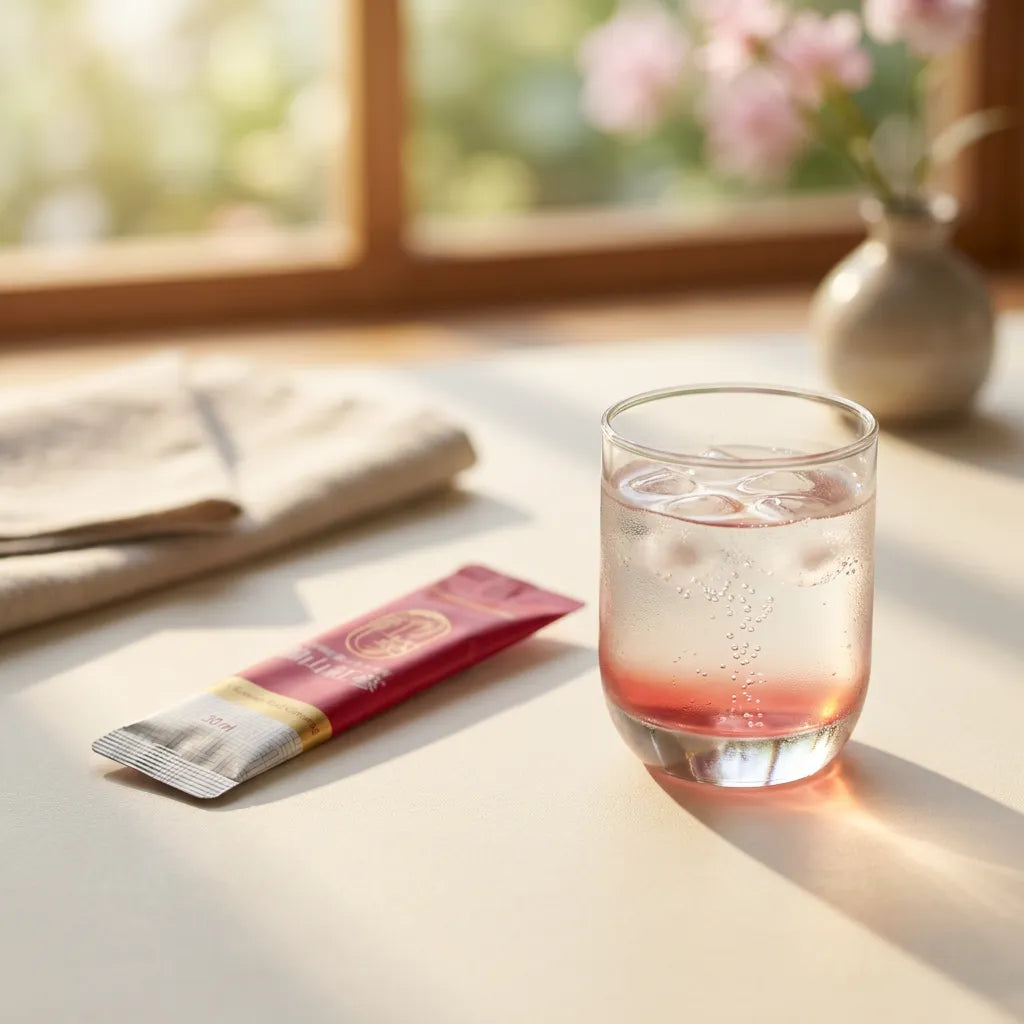
- Take convenience with you. An individually packed 30mL stick fits easily in your bag, with no brewing equipment required. Follow label storage instructions when you are on the go.
A quality ginseng stick is built for exactly this — 30 ml, honey-smooth, portable, no brewing. The taste is rich rather than bitter, which is part of why a daily habit actually sticks.
Your caffeine-free Korean ritual Dr. Choi Korean Red Ginseng is caffeine-free, made from 6-year Geumsan roots by a pharmacist, and built as a 30 ml daily ritual — honey-smooth, no brewing, lab-tested every batch.
Explore the ginseng →* These statements have not been evaluated by the Food and Drug Administration. This product is not intended to diagnose, treat, cure, or prevent any disease. Adaptogen research is ongoing and individual responses vary. This article is for educational purposes and is not medical advice; if you are pregnant, nursing, taking medication, or managing a health condition, consult a qualified healthcare professional before starting any supplement.